Summary
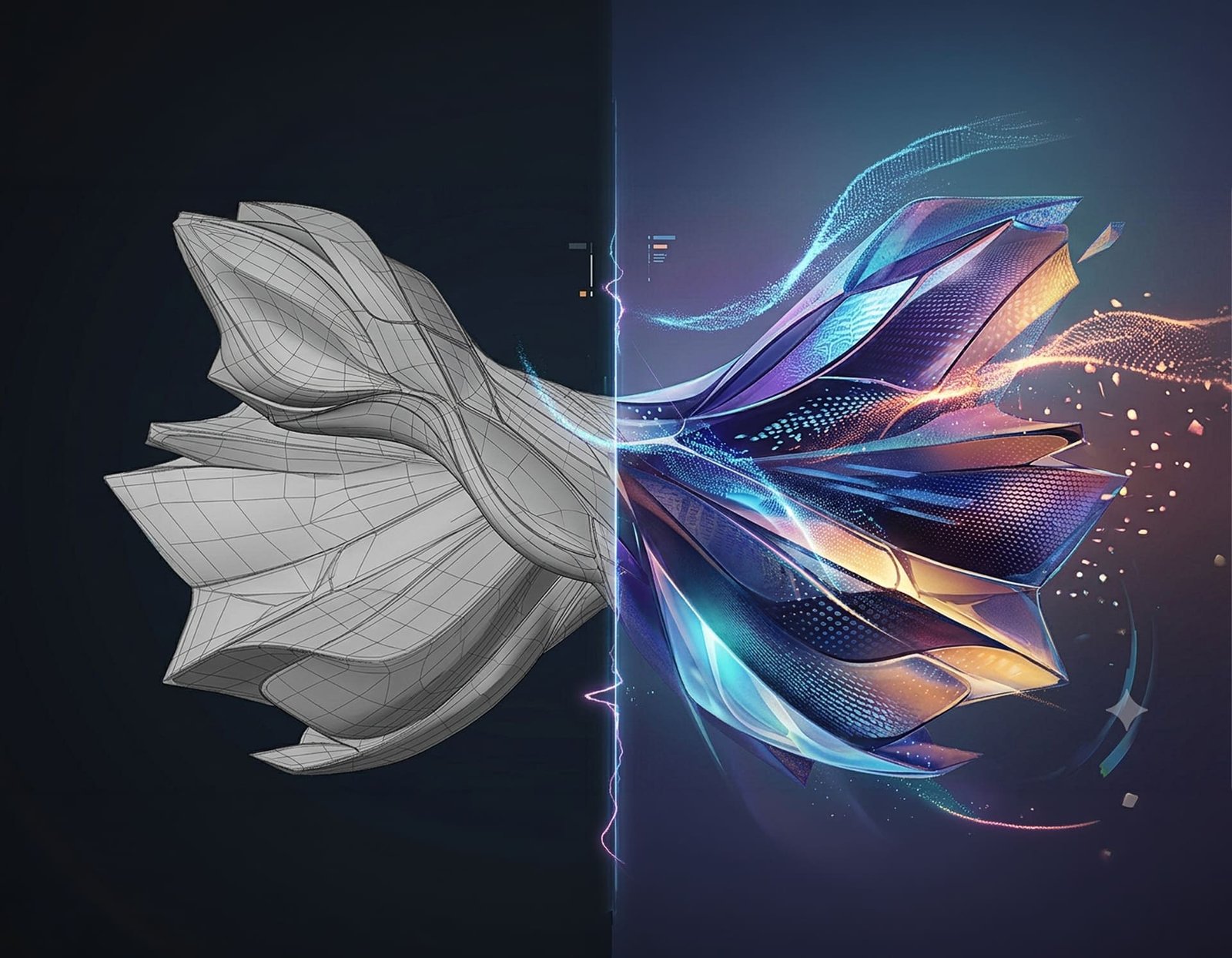
This research examines the formal and aesthetic transformation in three-dimensional visual production by comparing traditional (CPU) rendering technologies with instant and interactive (GPU) rendering technologies from the perspective of user opinions. In the literature, rendering technologies are mostly evaluated in terms of speed, hardware performance, and technical efficiency. However, the extent to which the form and aesthetic character of the produced visual are determined by technology is discussed only to a limited extent. Building on this gap, the research explores whether instant and interactive rendering technologies (Octane, Redshift, etc.) are merely tools that accelerate the process in three-dimensional visual production, or whether they are a decisive factor influencing the aesthetic and formal characteristics of the visual. The research also discusses whether these technologies lead to a formal homogenization in three-dimensional design. The research is based on semi-structured interviews with 9 Turkish and 9 foreign designers selected using maximum diversity and criterion sampling techniques within the framework of qualitative research methods. The data were analyzed using descriptive and constant comparative analysis methods within the themes of aesthetic transformation and technical transformation. The findings reveal that GPU-based rendering technologies play a decisive role in shaping visual components such as light, material, realism, and atmosphere, directly influencing the aesthetic character of the visuals produced. It was concluded that these technologies lead to a formal and aesthetic homogenization in three-dimensional design in the long term. When comparing the opinions of Turkish and foreign designers, no significant differences were found between the two groups.
Keywords: VR film, virtual reality cinema, experiential film, immersive video, VR narrative.
Abstract
This research examines the formal and aesthetic transformations in 3D visual production by comparing traditional (CPU) and real-time interactive (GPU) rendering technologies from the perspective of users. While existing literature primarily evaluates rendering technologies in terms of technical efficiency and hardware performance, the extent to which these technologies determine aesthetic character remains underexplored. This study investigates whether GPU rendering technologies (eg, Octane, Redshift) function merely as process-accelerating tools or as decisive factors shaping the formal characteristics of 3D visuals. It further examines whether these technologies lead to formal homogenization in 3D design. Employing a qualitative research design, the study utilizes semi-structured interviews with nine Turkish and nine international designers, selected through maximum variation and criterion sampling. Data were analyzed using descriptive and constant comparative methods within the framework of aesthetic and technical transformation. The findings reveal that GPU-based technologies play a decisive role in shaping core visual components—lighting, materiality, realism, and atmosphere—directly influencing the aesthetic character of visual outputs. It has been concluded that these technologies lead to formal and aesthetic homogenization in three-dimensional design over the long term. A comparison of the views of Turkish and international designers reveals no significant differences between the two groups.
Keywords: VR film, virtual reality cinema, experiential film, immersive video, VR narrative.
Authors: Kenan Subaşı
Journal Name: ANADOLU UNIVERSITY JOURNAL OF ART & DESIGN
Indexes in which the journal is listed: Emerging Sources Citation Index (ESCI), TR DİZİN (ULAKBİM)
DOI Number: In Press