Summary
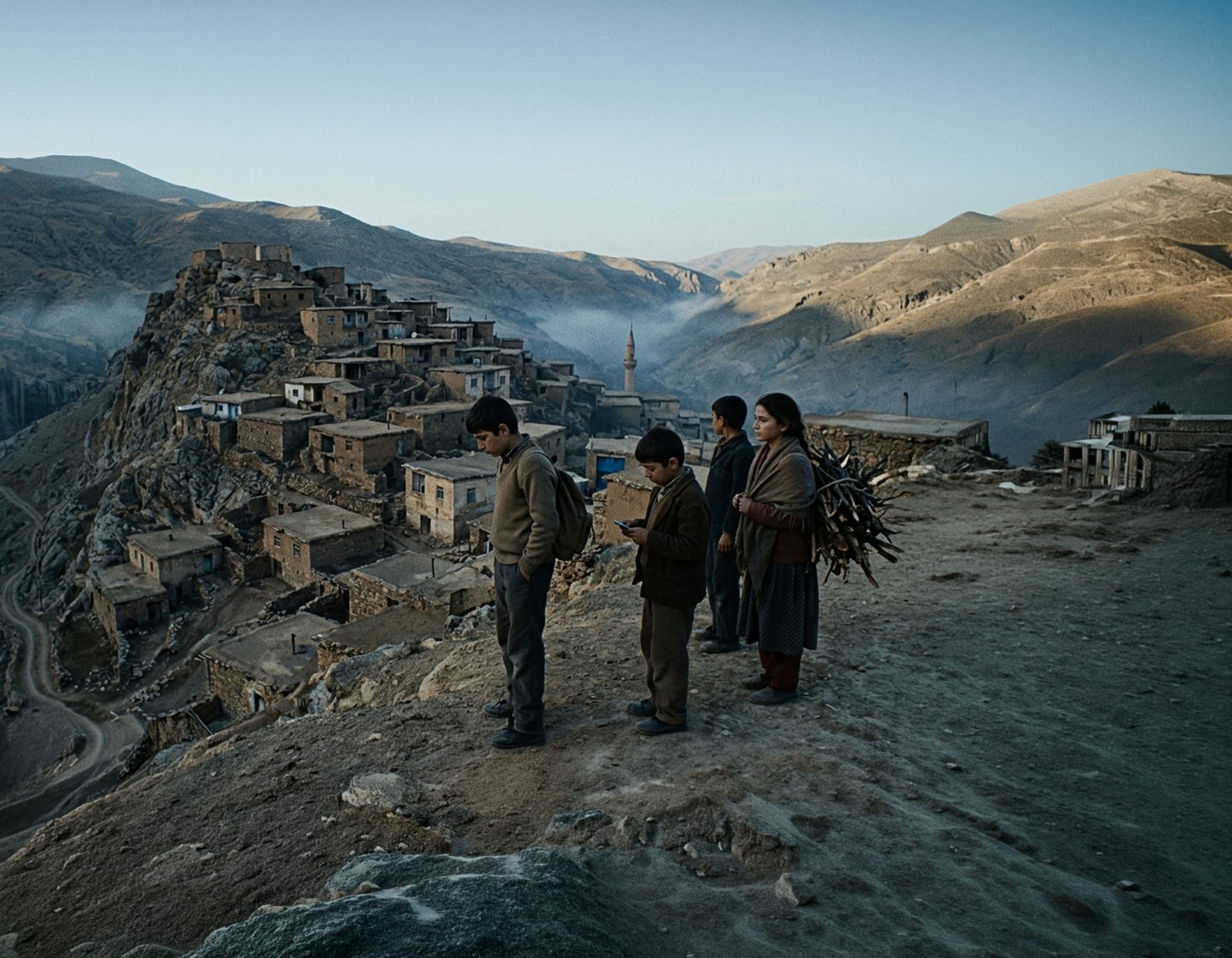
In his 2006 film *Five Times a Day*, Reha Erdem, the director, centers on three children, depicting the patriarchal order, authority, and the struggle for power within the context of relationships in a village. Through the characters Yakup, Ömer, and Yıldız, Erdem focuses on the relationships between adolescent children and their parents. The film's fundamental narrative structure centers on the parents' attempt to establish authority over their children using this relationship as a tool, and the children's struggle to resist this authority. Hugo Münsterberg argues that cinema appeals to the mind. He states that it is wrong to position the viewer passively, and that the viewer is actually in a reciprocal interaction with the images they watch. Defining cinema as an art form, Münsterberg claims that through editing, we can fragment time, move forward or backward in time, and that these aspects differentiate cinema from theater, giving it an advantage. Regarding the question of how the audience can understand the cinematic narrative created through editing, he argues that all these narrative tools are objectifications of mental processes. Rudolf Arnheim's work on "Cinema as Art" is based on Gestalt theory. Gestalt theory means the whole. It states that parts make up a whole, but each part that makes up the whole creates a greater meaning than the whole itself. Alongside the Gestalt theory that Arnheim experienced, he also states that every art form has its own unique language. According to Arnheim's art theory, a work of art is not a recorded copy of reality, but rather the transformation of its observed qualities into the forms of a particular medium. Like Münsterberg, Arnheim also states that cinema is a mental process. Although he approaches the relationship between cinema and technology with apprehension, his work aims to prove that cinema is an art form. In this paper, while examining Reha Erdem's film "Five Times a Day," we will draw upon Hugo Münsterberg's theory of "Time, Space, and Causality," Rudolf Arnheim's perspective on "Cinema as Art," and the "Soviet Montage Theory" of Russian filmmakers.
Keywords: Reha Erdem, Cinema, Power, Art
Abstract
Reha Erdem tells the patriarchal order, authority and the struggle with power in the context of relations within the life of the village, by taking three children to the center in the 2006 film Beş Vakit, which he directed. Erdem focuses on the relationships of adolescent children with their parents in the film's narrative based on the child characters Yakup, Ömer and Yıldız. The basic narrative structure of the film; It is seen that he focuses on the story of parents who use this relationship as a tool to establish an authority over their children, and children who try to resist this authority. Hugo Münsterberg says that cinema appeals to the mind. It states that it is wrong to passively position the audience, in fact, the audience interacts with the images they watch. Defining cinema as a branch of art, Münsterberg claims that we can divide time, move forward or backward in time through editing in cinema, and claims that cinema differs from theater in these aspects, and in these aspects it provides superiority to theater. To the question of how the audience can understand the cinematic narrative created through editing, he says that all these means of expression are the objectification of mental processes. Rudolf Arnheim's “Cinema as Art” studies are based on Gestalt theory. Gestalt theory means the whole. It states that the parts constitute a whole, but each of the parts that make up the whole creates a greater meaning than the whole. He says that besides the Gestalt theory that Arnheim experienced, each branch of art has its own language. According to Arnheim's theory of art, the work of art is not a recorded copy of reality, but the transformation of its observed qualities into the forms of a particular medium. Arnheim, like Münsterberg, states that cinema is a mental process. Although he approaches the relationship between cinema and technology with fear, his works are in the direction of proving that cinema is an art. Within the scope of our report, Hugo Münsterberg's “Time, Space and Causality” theory, Rudolf Arnheim's “Cinema as Art” perspective, and Russian filmmakers' ’Soviet Montage Theory“ will be used while examining Reha Erdem's Five Times film.
Keywords: Reha Erdem, Cinema, Power, Art
Authors: Hasan Yaman, Hakan Alp, Kenan Subaşi
Symposium: International Communication and Art Symposium (INCAS), Elazığ, Türkiye, September 4, 2021, Vol. 1, pp. 31-32